

The four-year implementation of the eBussed Interreg Europe project, which aims to establish widespread electric bus transport across Europe, will conclude on 31 July 2023. In this, our final newsletter, we review the most important events of May and June 2023, and also report on the implementation of the electric bus transport developments planned within the project.
Italian closing conference
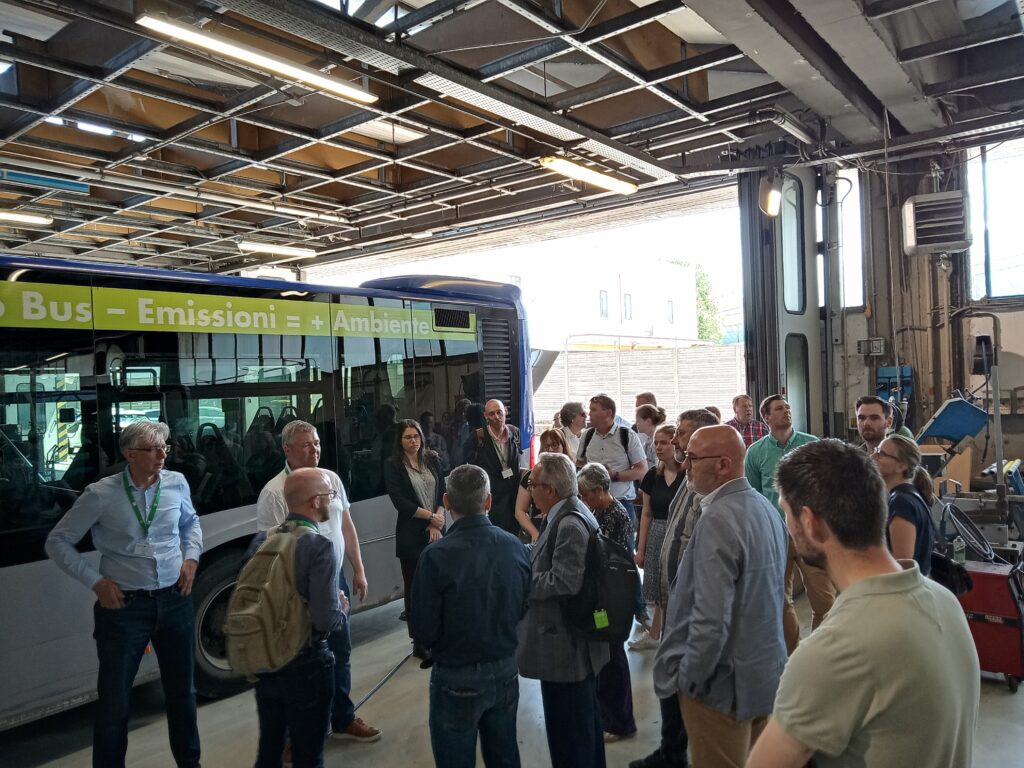
The final events of the eBussed project took place in Livorno on 25-26 May 2023. At the closing conference, attended by around 40 participants, the South Transdanubian Regional Innovation Agency (STRIA) presented the results of its cooperation with local bus companies in Kaposvár, Pécs and Paks. Since the implementation of the eBussed project coincided with the transition of the three cities' bus fleets to low-emission status, the international exchange of experience effectively supported the process, which required technological, public procurement and attitudinal changes alike.

The project closure is also an excellent opportunity to learn about good practices in local electric bus transport. Although the Tuscan public transport provider, Autolinee Toscane, has not yet begun converting its diesel fleet to electric, during the presentation of its Florence depot it shared several important aspects that need to be considered prior to such a transition.
Digitisation and new-generation electric charging solutions
As part of the eBussed project, DDRIU, in cooperation with the Managing Authority of the Integrated Transport Operational Programme Plus, developed the Hungarian eBussed action plan, which reviewed potential areas for digitalisation and alternative charging options regarding electric buses – and subsequently tested them on a pilot basis. The domestic eBussed action plan focused on the Central Danube Region (CDR), and its implementation, in close cooperation with the Central Danube Development Agency, was completed in June 2023.
In connection with digitalisation, we proposed the city card system already operating in Paks to better determine passenger numbers and the demand for the service. The same goal can be achieved more accurately, but at a higher cost, by using boarding and alighting passenger counters. However, this is not included in the plans for the KDMKT area, nor is the digital support for training alternative vehicle propulsion technicians or bus drivers with up-to-date knowledge and professional experience.
Instead of the current depot charging, the experts also considered other solutions (charging via pantograph, charging in the bus bay, charging at the given bus route's terminus, etc.). However, given the low number of DC and AC chargers in the KDMKT area, the proposal favoured depot and terminus charging. Regarding the latter, it also raised the possibility of public and semi-public use of the charging infrastructure.
For more details on the eBussed project and its further results, please https://projects2014-2020.interregeurope.eu/ebussed/ you can read on the website.
The eBussed project is co-financed by the European Regional Development Fund and Hungary within the framework of the Interreg Europe programme.