
A sustainable food system starts where local producers, consumers, businesses and communities are brought closer together again.
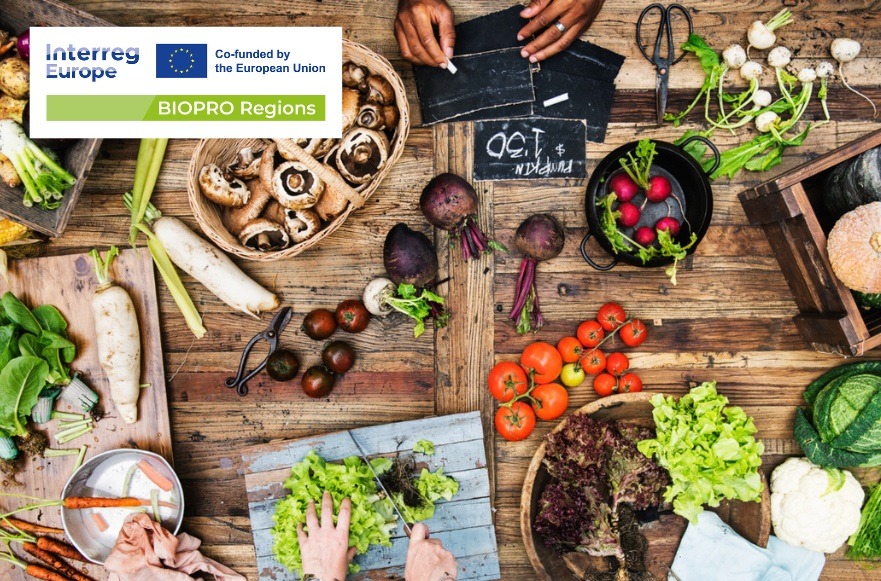
Local food systems are simultaneously economic, environmental and community issues today. It matters greatly how well a region's producers, processors, traders and consumers are able to connect with one another, what opportunities they have for sustainable operation, and how local, organic or proximity products reach the market.

Who is it useful for?

BIOPRO Regions is aimed at those who see local products, the sustainable food industry and short supply chains not as isolated topics, but as an opportunity for regional development.

    • For agri-food businesses and SMEs
      Could you give good examples of how to develop more sustainable, innovative and resource-efficient operations in the fields of production, processing and distribution?.
 
    • For producers and local product manufacturers
      It can help local products to be more strongly linked to short supply chains, ecological awareness and regional identity.
 
    • For local authorities and development organisations
      It shows how local food systems can be strengthened through policy, community organisation and business support tools.
 
    • For clusters, chambers and innovation actors
      It offers new points of connection between producers, businesses, research institutions and consumer communities.
 
  • For consumers and local communities
    A sustainable food system also depends on consumer choices: the project helps people understand why local, sustainable products that come via shorter chains are important.

Why is this needed?

A sustainable food system is not just a matter of production: the local economy, consumer trust, environmental impact and regional competitiveness also depend on it.

Food systems carry a significant environmental burden, whilst producers, processors, small businesses and consumers simultaneously face challenges related to climate change, energy prices, supply chains and competitiveness. Local products, short supply chains and more sustainable processing solutions are present in many regions, but they often lack strong policy support, an appropriate service background and cooperation among stakeholders. This is particularly important for Central Transdanubia, because producers, processors, innovation actors, business development organisations, universities and research centres in the region can all contribute to the development of sustainable food systems. BIOPRO Regions can help the area to strengthen local agri-food value chains, the green and digital transition, and solutions supporting sustainable consumption, based on international good practices.

How does the project help?

The BIOPRO Regions project is not preparing yet another theoretical food industry strategy, but rather examining what good practices and policy tools can be used to build real regional change.

The aim of the project is to improve the local and regional policy instruments that support developments based on organic and local products, sustainable agri-food value chains, the circular economy and resource-efficient operations. In particular, BIOPRO Regions seeks answers to the following questions:

  • how to strengthen local and sustainable food production;
  • How can short supply chains be better supported?;
  • how local products can get to market more easily;
  • how the innovation capacity of food SMEs can be developed;
  • how the green and digital transitions can be linked in the agri-food ecosystem.
The project is based on the collection of good practices, study visits, workshops, policy learning and the involvement of local stakeholder groups.

Practical application

The project becomes tangible when a local food business not only wants to be more sustainable, but also looks for partners, good examples and a supportive environment to achieve this.

Let us imagine a small food business that wants to reduce its energy consumption, make its packaging more efficient, strengthen its relationship with local producers, or think in terms of a shorter supply chain. The business feels the pressures of sustainability expectations, but does not always know what good examples it can learn from, what support services it can utilise, or how it can connect with research institutions, clusters, chambers and innovation actors. In such a situation, BIOPRO Regions can provide international examples, policy lessons and regional connection points. Thus, sustainable operation can appear not merely as a compliance obligation, but as an opportunity for business and community development.

Our role

The task of the WTRDA is to make European knowledge on sustainable food systems usable for businesses, development actors and policy instruments in the Central Transdanubia region.

KDRIÜ is participating as a project partner in the BIOPRO Regions collaboration. Its main points of connection are the Central Transdanubian agri-food ecosystem, the green and digital transition, and the development of innovation and business support services. Within the project, KDRIÜ is examining how international good practices and policy lessons can be made interpretable for the region as well. From the perspective of the Hungarian connection, the S3 strategy is important, particularly the green and digital twin transition of the agri-food ecosystem. The project provides an opportunity for KDRIÜ to identify new service and support directions for the development of sustainable food industry value chains.

Partnership

The BIOPRO Regions project is being implemented by 8 partners from 7 countries. The partnership includes local and regional public actors, development agencies, an agricultural chamber and a protected area management organisation.
    • Comunidade Intermunicipal do Ave – Portugal, lead partner
 
    • Nicosia Development Agency (ANEL) – Cyprus, project partner
 
    • Dordogne Chamber of Agriculture – France, project partner, communications coordinator
 
    • County Administrative Board of Dalarna – Sweden, project partner
 
    • Central Transdanubian Regional Innovation Agency (KDRIÜ) – Hungary, project partner
 
    • Administration of Lithuania Minor Protected Areas – Lithuania, project partner
 
    • Municipality of Tetovo – North Macedonia, project partner
 
    • Regional Development Agency Bačka Ltd. Novi Sad – Serbia, project partner
 
  • Associated policy authorities:
    Nouvelle-Aquitaine Regional Council – France
    The Municipality of Bečej – Serbia
    Northern Regional Coordination and Development Commission Portugal

Are you interested in the project?

For further information, please visit the official project page or contact the project manager.

Official project page

Programme

Full project title

Status

Maturity period

Project
ID

Project participants
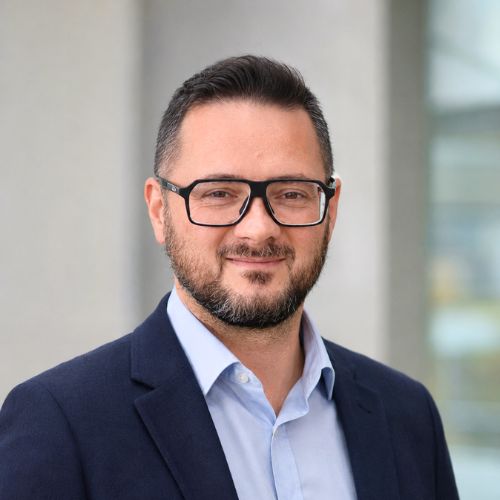
Hegedűs Viktor, a KDRIÜ vezető projektkoordinátora

Viktor Hegedűs

lead project coordinator

Kinizsi Gábor, a KDRIÜ kommunikációs menedzsere

Gábor Kinizsi

communications manager

Results and related knowledge base materials

The results of BIOPRO Regions will truly be useful if new services and better regional support tools are born from the good practices, workshops and policy lessons. The project's results will expand continuously as the work progresses.
    • Collection of good practices
      Sustainable food production, processing, distribution and consumption solutions from partner countries.
 
    • Materials for workshops and seminars
      Presentations, summaries and methodological lessons of the international learning events.
 
    • Results of the Hungarian stakeholder group
      Lessons learned from consultations with food industry, innovation, business development and policy actors in Central Transdanubia.
 
    • Policy development proposals
      Recommendations on how to better support local products, short supply chains, organic and proximity products, as well as the green and digital transition.
 
    • Concepts of new support services
      Potential new services to support the sustainable transition of food businesses.
 
  • Communication materials
    Project brochure, project poster, newsletters, videos, social media content and press materials.

Related communication content

BIOPRO Regions – Newsletter #2

The second newsletter of the BIOPRO Region project (June 2026).

BIOPRO Regions – Newsletter #1

The first newsletter of the BIOPRO Region project (December 2025).

BIOPRO Regions project video

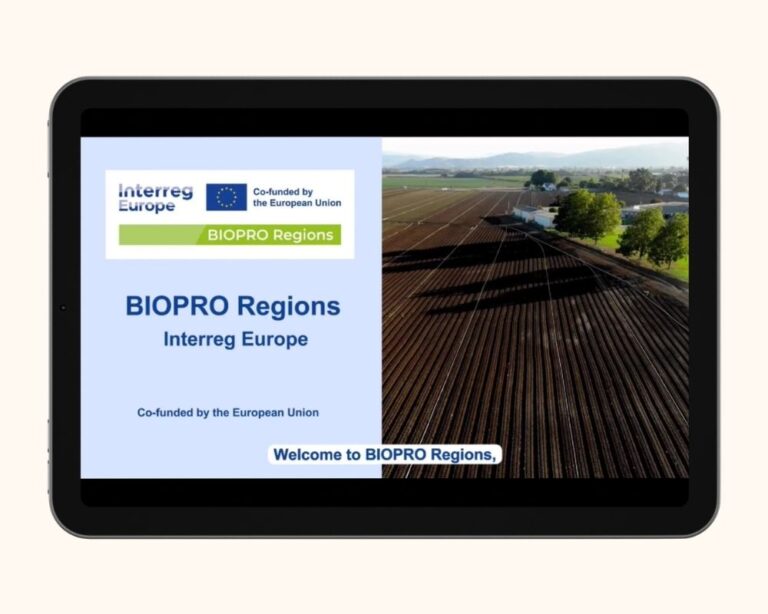
Introductory video of the BIOPRO Regions project.