
Culture is not only a value, but also a local economic, community and innovation resource.

The COVID-19 crisis has hit the cultural and creative industries particularly hard: events, festivals, museums, performing arts venues, creative businesses and freelance creators have lost a significant proportion of their audience, revenue and operations. The CHERRY – making Culture tHe N°1 ally of European RecoveRY the project is seeking answers on how culture can become an ally of local economic, social and territorial renewal. The project is not just about cultural programmes, but about policy learning, good practices, digital cultural services, new narratives and pilots that bring creative and digital actors closer together.

Who is it useful for?

CHERRY is for those who see culture not as an isolated sector, but as an opportunity for local economic, tourism, community and digital development.

    • For cultural and creative enterprises
      It can help in the development of new services, digital formats, collaborations and business models.
 
    • For arts and cultural organisations
      It can be useful for theatres, festivals, museums, cultural centres and arts groups, particularly in the field of digital audience engagement and new narratives.
 
    • For local authorities and regional development actors
      He gives good examples of how culture can be used as a tool for urban development, public spaces, tourism and local economic development.
 
    • For tourism and heritage conservation stakeholders
      It can provide inspiration for a new type of utilisation of cultural and natural heritage.
 
    • For digital and audiovisual service providers
      It opens up connectivity towards podcasts, web content, virtual experiences, augmented reality and digital storytelling.
 
  • For policymakers
    It can provide lessons for support instruments that enhance the creative industry's resilience, digitalisation, and role in the local economy.

Why is this needed?

The pandemic showed that culture is not just a programme or an event, but also an economic, community and mental wellbeing resource.

The cultural and creative industries proved particularly vulnerable during the COVID-19 crisis. Actors relying on physical presence, audiences and events rapidly lost revenue, connection and operational security. This was not only a cultural loss, but also an economic, employment and community problem. The crisis highlighted the fact that culture plays a role in people's well-being, mental health and community connectivity. The fundamental question of CHERRY is: how can the cultural and creative industries be strengthened so that they not only survive crises, but are active participants in local renewal? For the Central Transdanubia and Lake Balaton region, this is particularly important due to the legacy of the Veszprém-Balaton 2023 European Capital of Culture programme, cultural tourism and the development opportunities of the creative economy.

How does the project help?

CHERRY does not treat culture as a separate sector, but as a shared development field for urban regeneration, the local economy, tourism and digital innovation.

The aim of CHERRY is to improve 9 regional and local policy instruments to support the cultural and creative industries. The project seeks to find out how cultural and creative actors can:

  • become more resilient to crises;
  • connect better with the local economy;
  • take on a stronger role in urban and regional renewal;
  • develop new digital services and forms of communication;
  • contribute to the utilisation of the natural and cultural heritage.
The project is based on good practices, study visits, thematic learning processes, stakeholder meetings and joint pilots. The Hungarian pilot is linked to the development of new narratives and digital cultural services.

Practical application

The project becomes tangible when a cultural organisation wants to use digital services to reduce seasonality and reach new audiences.

Imagine a cultural organisation or creative business that heavily relies on personal presence, the tourist season and event attendance. The pandemic showed that if physical events are cancelled, it can cause rapid revenue loss and audience drop-off. At the same time, it was also seen that digital content, online audience engagement and new forms of storytelling can reach new target groups. In such a situation, CHERRY connects cultural, digital and development players. The project draws inspiration from the good practices of other European regions and helps to interpret how culture can become part of local economic development.

Our role

The role of KDRIÜ is to link the cultural, creative and digital development opportunities of the Lake Balaton region with European good practices and policy lessons.

KDRIÜ is participating as a Hungarian project partner in the CHERRY project. The Hungarian policy connection is Development Programme of the Balaton Priority Region 2021–2027.KDRIÜ plays a role in local stakeholder engagement, the identification of good practices, the learning process, and the preparation of the pilot. The Hungarian focus appears particularly at the intersection of the creative industries, digital cultural services, tourism, and local economic development. The value of the project for KDRIÜ lies in integrating the cultural heritage, creative actors, and digital service providers of the Veszprém-Balaton region into a broader European policy learning process.

Partnership

The CHERRY partnership connects European regions, public institutions and development organisations so that culture can truly become an ally of local regeneration. The partnership brings together public institutions and development organisations from 8 European countries.
Managing partner:
Autonomous Region of Friuli Venezia Giulia, Department for Culture and Sports – Italy
Project partners:
Veneto Region – Italy Kainuu Regional Council – Finland Centru Regional Development Agency Romania Zemgale Planning Region – Latvia Central Transdanubian Regional Innovation Agency – Hungary Region of Western Greece – Greece Provence-Alpes-Côte d'Azur region – France Intercommunal Leiedal – Belgium

Are you interested in the project?

For further information, please visit the official project page or contact the project manager.

Official project page

Programme

Full project title

Status

Maturity period

Project
ID

Project participants

Viktor Hegedűs, Senior Project Coordinator of KDRIÜ

Viktor Hegedűs

lead project coordinator

Results and related knowledge base materials

The results of CHERRY are truly useful when new cultural and digital development directions emerge from the good practices, pilots and policy lessons.
  • Collection of good practices
    Examples related to cultural and creative industries, urban transformation, heritage values and local economic development.
 
  • Good practice brochure
    Communication material presenting the results of the peer-to-peer learning process.
 
  • Decision-maker's guide / policy guideline
    Policy lessons and development proposals in the project follow-up phase.
 
  • Pilot results
    Methodological experiences relating to digital cultural services and new narratives.
 
  • Lessons learnt from local workshops and study visits
    Summaries of stakeholder meetings, international learning events, and professional consultations.
 
  • Videos and newsletters
    Project presentation, videos summarising the learning process and regular newsletters.

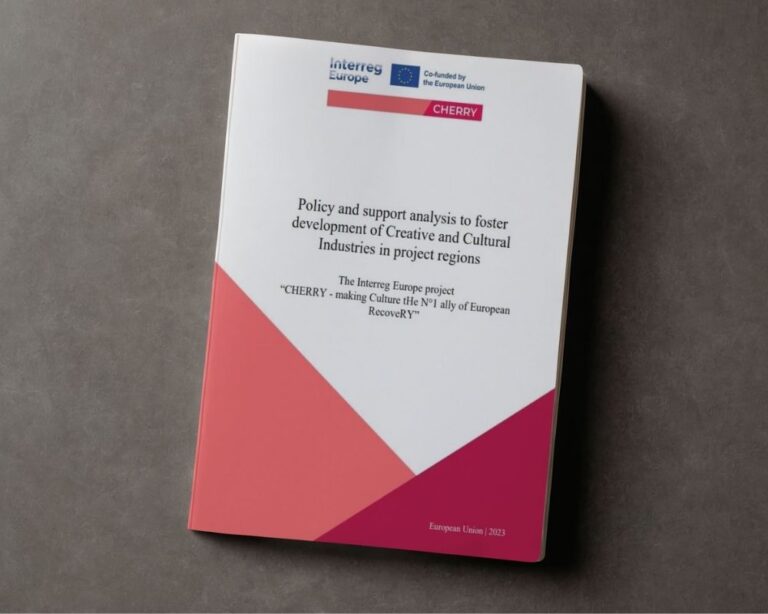
CHERRY – Policy and Support Analysis

Policy and support analysis to promote the development of creative and cultural industries operating in the project regions.

Related communication content
CHERRY project video

The promotional video for the CHERRY project.

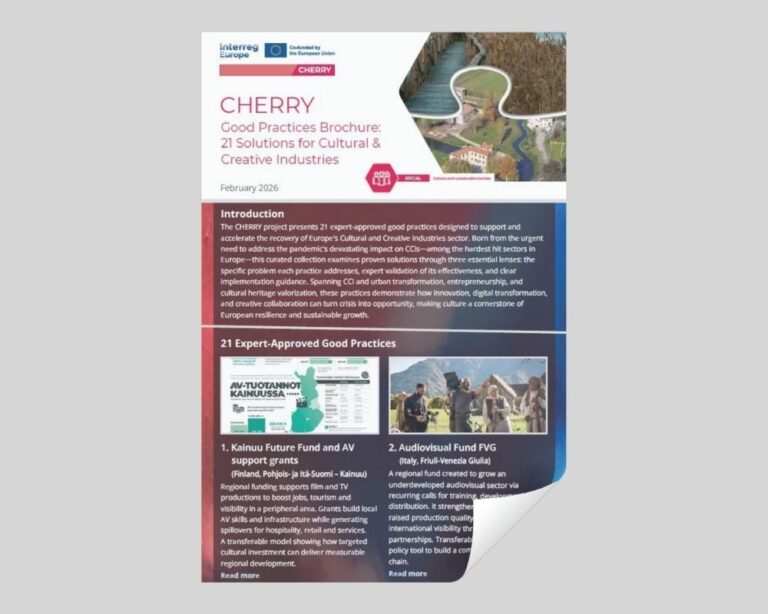
CHERRY – Good Practice brochure

Presentation of the 21 Good Practices collected in the CHERRY project.
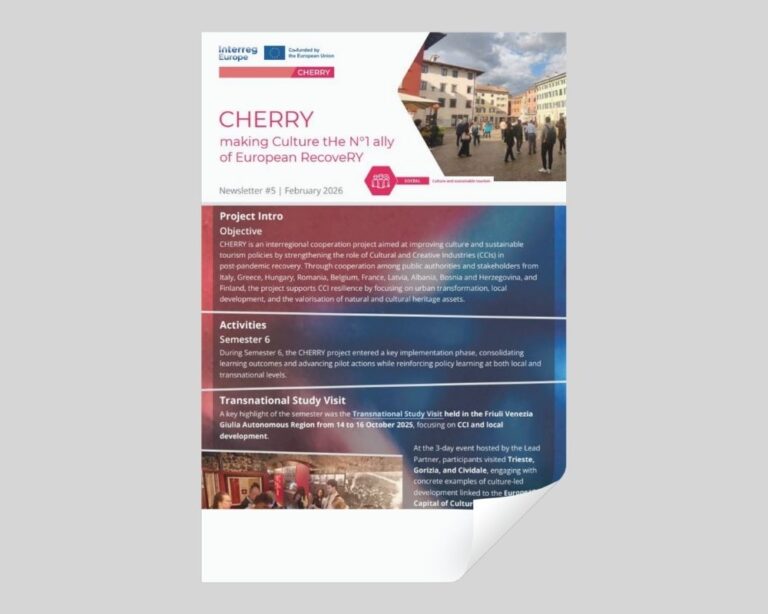
CHERRY - Newsletter #5

The fifth newsletter of the CHERRY project (February 2026).

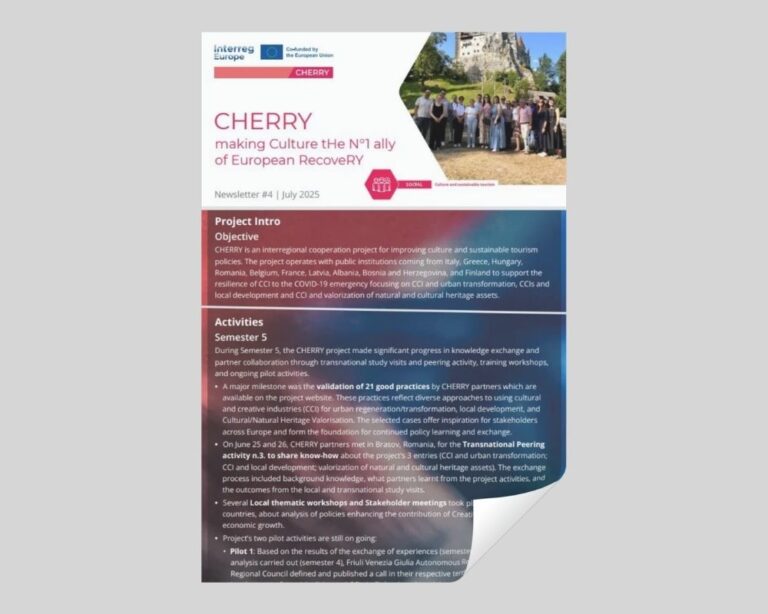
CHERRY – Newsletter #4

The fourth newsletter of the CHERRY project (July 2025).

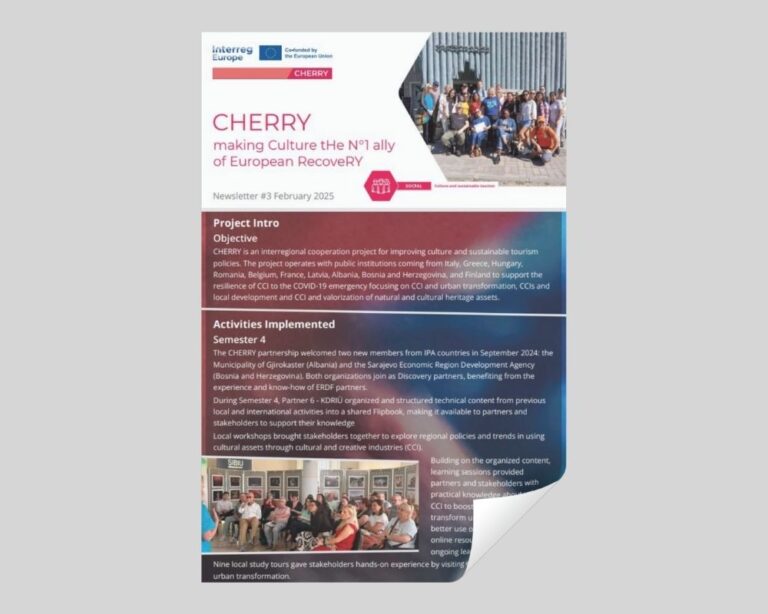
CHERRY – Newsletter #3

The third newsletter of the CHERRY project (February 2025).

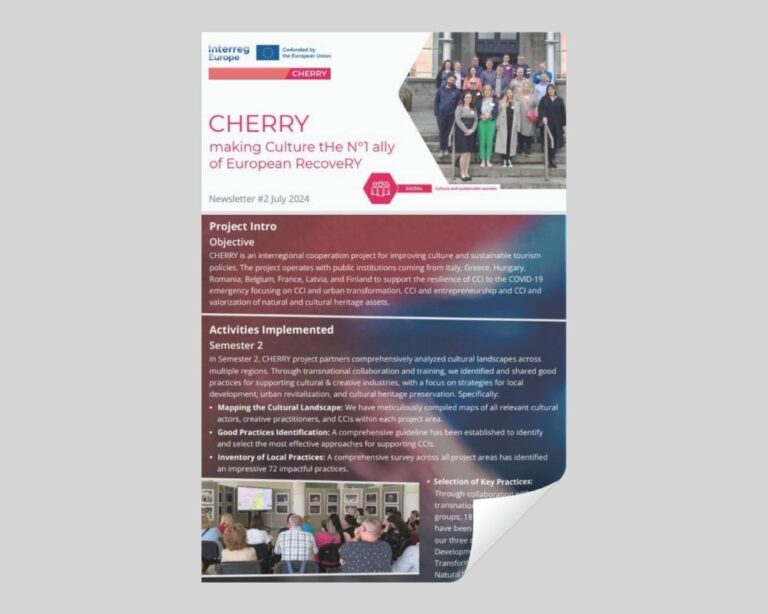
CHERRY – Newsletter #2

The second newsletter of the CHERRY project (July 2024).

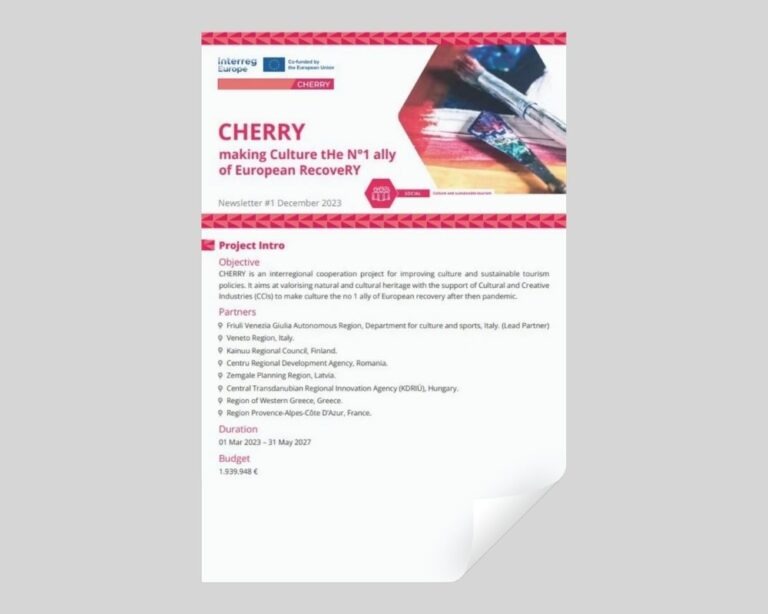
CHERRY – Newsletter #1

The first newsletter of the CHERRY project (December 2023).